

This year’s edition of the eGovernment Summit had the central theme of reducing administrative friction — exactly the problem that implementation teams solve day by day with Asigno. Our presentation started with a simple question: how much of the duration of a case is actual work and how much is waiting time between departments?
What we showed on stage
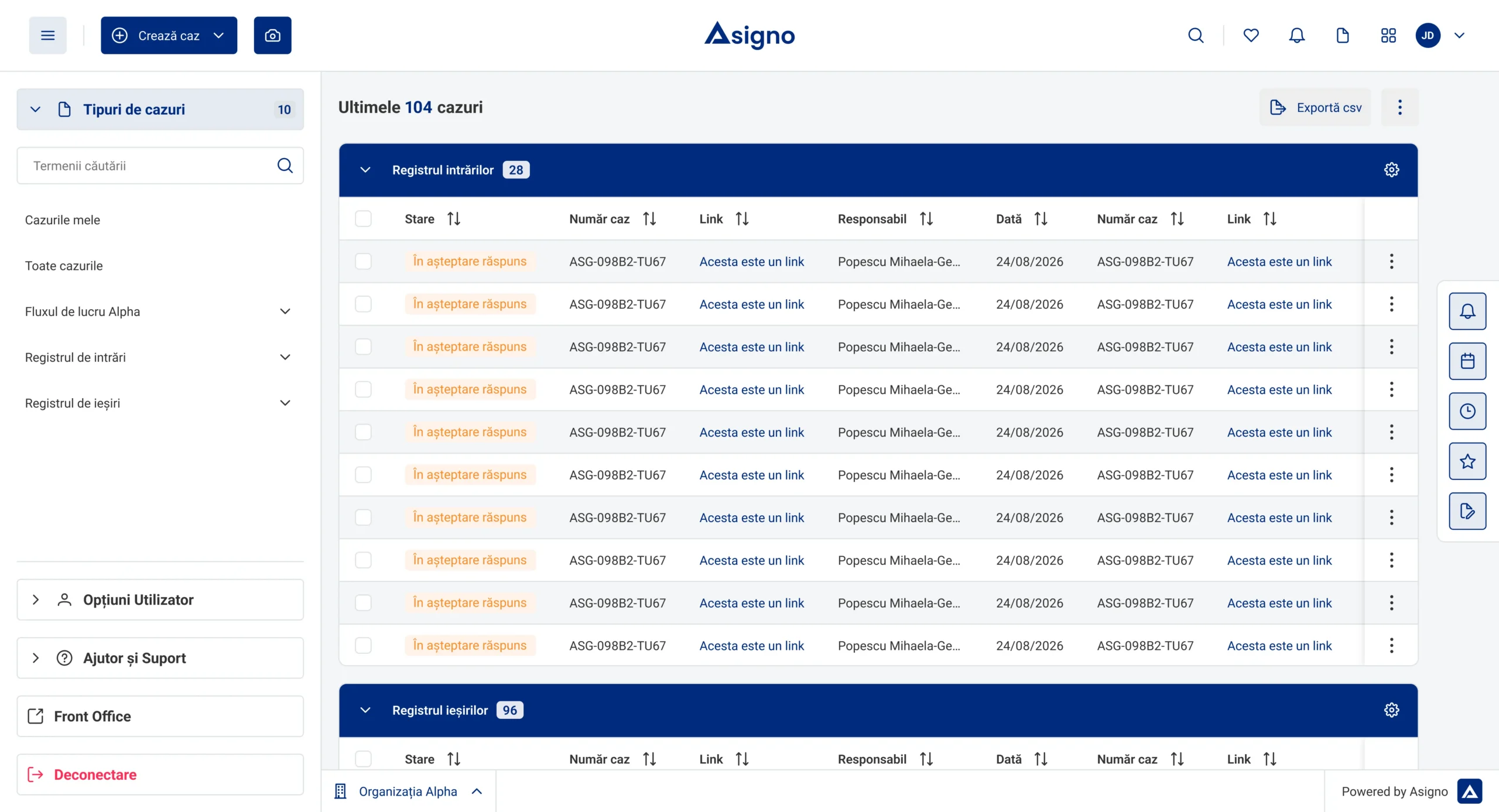
We followed the path of a real case, from online submission to the final decision, highlighting the steps where the distributed case management eliminates manual transfers. The BPM engine takes over the routing, the decision rules are configured from the interface, and the user can see the status of the case at any time and the associated deadlines.
“We are not automating the existing bureaucracy. We are redesigning it, then automating what remains.”
Three conclusions from the implementations in Romania and Malta
- The “once only” principle changes the experience. Citizens are no longer asked for data the institution already holds, and the number of attached documents drops significantly.
- Integration matters more than the interface. Connecting to national registries shortens the verification time from days to seconds.
- The reports must be configurable by the business. The Business Intelligence component allows teams to build their indicators without code.
We closed with a Q&A session on perpetual licensing and deployment options — private cloud, public cloud or on-premise — and how they affect data governance in the public sector.
What's next
In the coming months we will publish a series of detailed case studies on each industry we work in. If you want to discuss a specific process within your organization, schedule a demo and we will show you the platform in action for your use case.